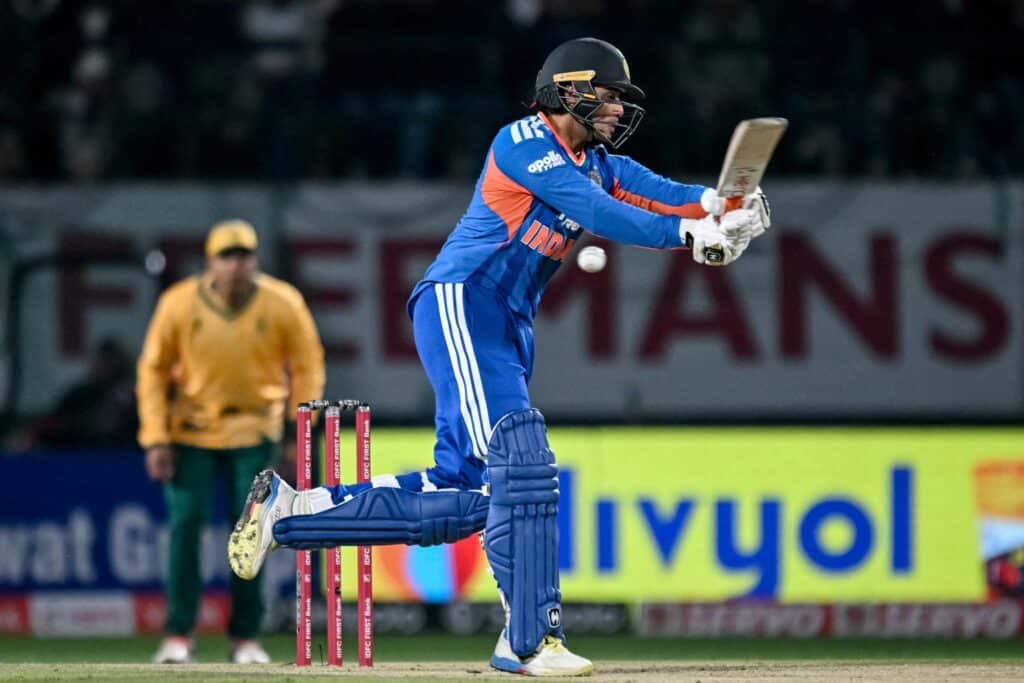
Thursday night at the Wankhede Stadium in Mumbai delivered one of the greatest T20 World Cup semi-finals in history. The defending champions held their nerve to defeat their rivals by seven runs in a pulsating encounter that saw 499 runs scored and 34 sixes hit across 40 overs. The hosts now march into Sunday’s final at the Narendra Modi Stadium in Ahmedabad, where they’ll face New Zealand with history on the line.
Samson’s Explosive Start Powers Massive Total
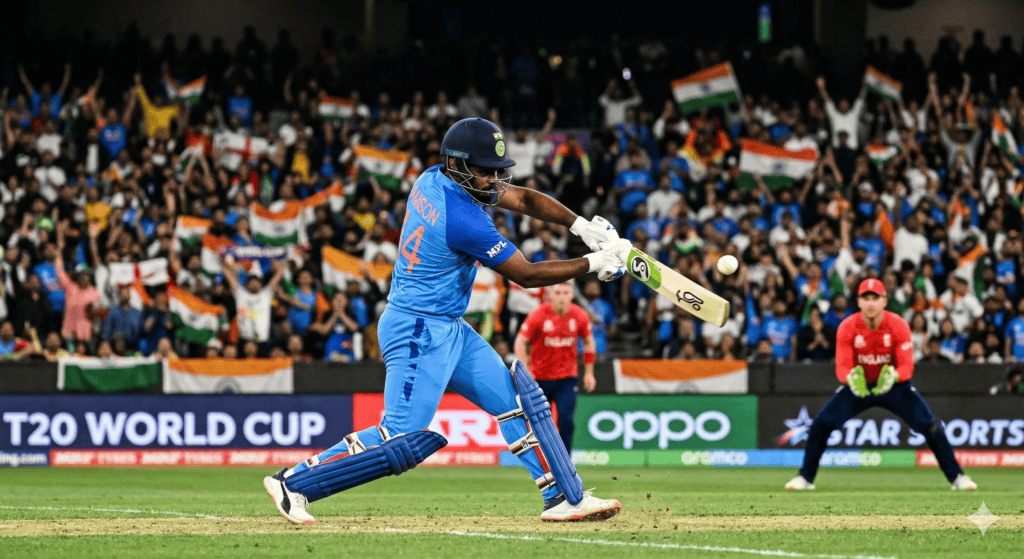
After winning the toss and choosing to bowl first, England captain Harry Brook watched his decision backfire spectacularly as the India vs England semi-final turned into a batting exhibition. Sanju Samson continued his sensational tournament form with a blistering 89 off just 42 deliveries, an innings studded with seven maximums and eight boundaries that had the capacity crowd roaring throughout.
According to ICC’s official match coverage, Samson’s knock provided the platform for what became the highest score ever posted in a T20 World Cup knockout match. The opener showed his intent from the very first ball, attacking the bowling with calculated aggression while maintaining excellent strike rotation.
The foundation was laid through a magnificent 97-run partnership between Samson and Ishan Kishan for the second wicket. After Abhishek Sharma departed early for just nine runs off seven balls in the second over, these two batters steadied the innings before launching a brutal assault. By the end of the powerplay, the hosts had raced to 67 for one, completely dominating the English bowling attack.
Kishan played the perfect supporting role, contributing a rapid-fire 39 off just 18 deliveries. His strike rate of over 216 complemented Samson’s aggression beautifully, ensuring both batters kept the scoreboard ticking at an electric pace. Their partnership effectively ended England’s hopes of restricting the total to a chaseable number.
Brook later admitted he made a crucial mistake by dropping Samson when the opener was on just 15 runs in the fourth over. That missed chance off Jofra Archer’s bowling proved enormously costly, as Samson went on to add another 74 runs and completely change the complexion of the innings.
After Samson’s departure, the middle order ensured no momentum was lost. Shivam Dube smashed 43 runs off 25 balls, Tilak Varma blasted 21 off just seven deliveries, and Hardik Pandya contributed a vital 27 off 12 balls. The late acceleration pushed the final total to a monumental 253 for seven, setting a record target for any T20 World Cup semi-final.
Jofra Archer endured a difficult evening, conceding 61 runs from his four overs as the batters repeatedly found the boundary. Sam Curran also went for 53 runs, unable to contain the onslaught. According to ESPN Cricinfo’s detailed statistics, this represented the most runs ever scored in a men’s T20 World Cup match when combined with England’s eventual total.
Bethell’s Heroic Century Nearly Pulls Off Miracle
Chasing 254 runs for a spot in the final, England faced the highest target in T20 World Cup history. The India vs England chase began disastrously as Phil Salt, Jos Buttler, and Harry Brook all departed inside the first six overs, leaving the visitors reeling at 45 for three and seemingly out of contention.
Hardik Pandya struck with the very first ball of his spell, dismissing Salt to set the tone. Jasprit Bumrah then produced a clever slower delivery that deceived Brook completely. The England captain backed away looking to force the shot but mistimed it badly, sending the ball looping over the cover region where Axar Patel ran back to complete a brilliant diving catch.
Jos Buttler briefly looked in good touch, scoring 25 off 17 balls with some elegant strokeplay. However, Varun Chakravarthy broke through in the sixth over, having the England wicketkeeper-captain bowled by a wrong’un that sneaked through to clip the top of leg stump. At 64 for three after the powerplay, England appeared dead and buried.
Enter Jacob Bethell, who produced an innings that will be remembered for generations regardless of the final result. The 22-year-old left-hander announced his intentions immediately, smashing three consecutive sixes off Chakravarthy in the seventh over. According to Outlook India’s ball-by-ball coverage, those three maximums completely changed the momentum and gave England belief.
Bethell reached his half-century in just 19 balls, equaling Finn Allen’s record for the fastest fifty in T20 World Cup knockout matches set just days earlier in the other semi-final. The joint-fastest fifty also represented England’s quickest in the entire tournament, surpassing Will Jacks’ previous mark. His assault on the Indian bowling was relentless, featuring powerful shots all around the wicket.
Will Jacks provided valuable support during a crucial 77-run partnership off just 39 balls. Jacks contributed 35 off 20 deliveries, hitting one particularly massive six off Axar Patel while treating Chakravarthy like a medium-pacer. However, brilliant fielding ended his innings when Axar Patel ran from deep cover, got hands to a sliced shot, and tossed it to Shivam Dube who completed the relay catch.
Bethell continued his remarkable assault, bringing up his century in just 45 balls – the second-fastest hundred in T20 World Cup history. His innings of 105 off 48 deliveries included eight boundaries and seven sixes, representing the highest individual score ever made in a T20 World Cup knockout match. He surpassed Allen’s century from the first semi-final to claim that record.
Despite losing partners at regular intervals, Bethell kept swinging and kept England dreaming. Tom Banton contributed briefly before departing, and Sam Curran added 18 off 14 balls before Tilak Varma took a catch at the midwicket boundary. With Bethell still at the crease, anything seemed possible.
Bumrah’s Death-Over Brilliance Seals Victory
With Jacob Bethell seemingly unstoppable and England needing just 45 runs from the final three overs, captain Suryakumar Yadav turned to his trump card. Jasprit Bumrah, who had already dismissed Harry Brook earlier, was entrusted with the crucial 18th over. The India vs England contest hung in the balance, with one over potentially deciding the match.
Bumrah delivered a masterclass under immense pressure. His 18th over cost just six runs despite Bethell being well-set and desperate to maintain strike. The right-arm quick bowled mostly yorkers and near-perfect wide deliveries, giving the batsman absolutely nothing to work with. According to Al Jazeera’s live updates, Bumrah’s crowd had their hands on their knees while he executed his plans with surgical precision.
That over completely changed the equation. Instead of needing 39 runs from 12 balls with Bethell on strike, England suddenly required 39 from 12 balls but with the pressure firmly back on them. The asking rate had become almost impossible, requiring multiple boundaries every over.
Hardik Pandya then bowled a remarkable 19th over, conceding just nine runs and crucially dismissing Sam Curran. The all-rounder used all his experience, bowling smart full deliveries that cramped the batsmen for room. Curran’s dismissal left England needing 30 runs from the final over with Bethell having just hit his century.
Shivam Dube was entrusted with bowling the final over, despite it being his first over of the innings. The left-arm spinner faced immediate onslaught from Jofra Archer, who smashed three consecutive sixes over long-off to keep hope alive. However, with nine runs still needed from the final delivery, Bethell attempted a suicidal second run after drilling a ball to long-on.
Hardik Pandya’s accurate throw from the deep found Samson, who whipped off the bails with Bethell well short of his ground. The run-out at 105 ended England’s hopes and sealed the hosts’ progression to the final. The crowd erupted in celebration as the defending champions survived one of the greatest World Cup chases ever mounted.
Bumrah finished with figures of two wickets for 36 runs in his four overs, but his economical spell in the death overs proved match-defining. Post-match, Samson praised his teammate, calling him “once in a generation” and suggesting the Player of the Match award should have gone to the pace ace.
Key Turning Points That Decided The Contest
Several crucial moments throughout this India vs England semi-final ultimately determined the outcome. Harry Brook’s dropped catch of Sanju Samson when the opener was on 15 ranks as perhaps the most costly error. The England captain held his hands up afterward, admitting the mistake and acknowledging that such lapses cannot be afforded against quality opposition.
Had that catch been taken, the hosts would have been 45 for two in the fifth over rather than racing away. Samson went on to add another 74 runs, transforming what might have been 200 into an imposing 253. That single dropped chance potentially cost England 50-60 runs and with it, a spot in the final.
The fielding contrast between both sides proved decisive. While Brook dropped Samson early, Axar Patel produced a brilliant backward-running catch to dismiss Brook when England desperately needed their captain to anchor the chase. Later, Patel combined with Dube to execute the relay catch that dismissed Will Jacks just as his partnership with Bethell threatened to take the game away.
Varun Chakravarthy endured a nightmare evening, conceding 64 runs in his four overs – the most expensive figures by an Indian bowler in T20 World Cup history, surpassing Joginder Sharma’s 57 runs conceded in the 2007 final. Bethell’s three consecutive sixes off him in the seventh over completely changed the chase’s momentum and gave England genuine belief.
However, Chakravarthy did provide the crucial breakthrough of Jos Buttler in the powerplay, preventing a potentially dangerous partnership from developing. According to Republic World’s match summary, that dismissal kept the hosts’ noses in front even as Bethell began his assault.
The decision to hold back Shivam Dube’s single over until the 20th proved tactically brilliant. While risky given his lack of rhythm, it allowed the management to use their best bowlers – Bumrah, Pandya, and Arshdeep Singh – for the crucial middle and death overs when Bethell was going berserk.
England’s bowling lengths also contributed to their defeat. They bowled too short throughout, making it easy for batters to hit through the line. The hosts, conversely, executed full deliveries and yorkers perfectly during the death overs, making clean hitting significantly harder despite the small Wankhede boundaries.
Final Berth and History Beckons
This thrilling seven-run victory propels the defending champions into their second consecutive T20 World Cup final. The India vs England result confirmed the matchup for Sunday’s title decider – the hosts will face New Zealand at the Narendra Modi Stadium in Ahmedabad in what will be the first-ever meeting between these two nations in a T20 World Cup final.
Multiple historical firsts are now within reach. According to ICC’s tournament coverage, the hosts are aiming to become the first team to defend the T20 World Cup title successfully. They’re also chasing a third T20 world title, which would establish them as the most successful nation in the format’s history.
Additionally, victory on Sunday would make them the first host nation to win a T20 World Cup on home soil, adding another layer of significance to the occasion. The Narendra Modi Stadium, with its capacity exceeding 100,000 fans, will create an atmosphere unlike anything witnessed in T20 cricket previously.
Captain Suryakumar Yadav expressed his delight post-match, praising his team’s composure under pressure and highlighting Samson’s match-winning knock. The skipper revealed he knew the Wankhede pitch would remain good for batting throughout, which influenced his decision to bat first after winning the toss despite some suggestions that chasing might have been easier.
For England, this represents a heartbreaking end to what was ultimately a successful tournament campaign. Despite entering as underdogs and facing criticism during the group stages, Brendon McCullum’s side reached the semi-finals and pushed the defending champions to the absolute limit. Brook acknowledged his team should be proud of their performance while lamenting the fielding errors that proved costly.
Jacob Bethell earned universal praise despite finishing on the losing side. His 105 off 48 balls showcased his immense talent on the biggest stage, and Brook predicted the young left-hander would “earn some serious money” following this performance. The innings announced Bethell as a genuine superstar in the making.
The record-breaking nature of this semi-final will ensure it’s remembered for years. The combined total of 499 runs represents the most in any men’s T20 World Cup match. The 34 sixes hit throughout the contest created a carnival atmosphere that had the 30,000-plus crowd on their feet throughout.
Match Records and Statistical Milestones
This India vs England semi-final shattered numerous records and created several new benchmarks. The hosts’ total of 253 for seven represents the fourth-highest score ever posted in T20 World Cup history and the highest in any knockout match. It surpassed all previous semi-final scores, demonstrating the evolution of T20 batting.
Sanju Samson’s 89 off 42 balls earned him his second consecutive Player of the Match award. His recent form has been extraordinary – scores of 97 not out against West Indies followed by 89 against England showcase a player peaking at exactly the right moment. He’s found the perfect balance between aggression and calculation, maximizing good form through intelligent shot selection.
The 97-run partnership between Samson and Kishan represents the highest partnership by the hosts in T20 World Cup knockout matches, breaking the previous record. Their powerplay dominance set the template for the entire innings and gave the middle order freedom to attack from the outset.
Jacob Bethell’s 105 off 48 balls became the highest individual score in T20 World Cup knockout history, surpassing Finn Allen’s 100 not out from just days earlier. His 19-ball fifty tied the record for fastest in tournament knockouts, while his century came up in just 45 deliveries – the second-fastest hundred in World Cup history after Rohit Sharma’s 35-ball effort.
Varun Chakravarthy’s unfortunate record of conceding 64 runs surpassed Joginder Sharma’s 57 runs from the 2007 final as the most expensive figures by an Indian bowler in World Cup matches. However, his crucial wicket of Buttler somewhat redeemed the overall performance.
Final Thoughts on an Instant Classic
The seven-run margin perfectly encapsulates how close this contest was despite the hosts seemingly controlling proceedings for large stretches. The 254-run target looked insurmountable when England slumped to 45 for three, yet Bethell’s brilliance made it competitive until the final delivery.
Both teams deserve immense credit for the entertainment provided. The India vs England rivalry in World Cup cricket continues to produce memorable encounters, and this semi-final ranks among the very best. From Samson’s explosive opening to Bethell’s heroic century to Bumrah’s nerveless death bowling, every phase contained match-defining moments.
Now attention turns to Ahmedabad and Sunday’s final against New Zealand. The trans-Tasman neighbors defeated South Africa in the first semi-final, setting up a fascinating title clash between two teams playing their best cricket at the perfect time. The hosts will enter as favorites given home advantage and recent form, but knockout cricket’s unpredictability means nothing can be taken for granted.
For the 30,000-plus fans who packed the Wankhede Stadium on Thursday night, this was a performance they’ll remember forever. The defending champions demonstrated resilience, skill, and composure to overcome an inspired opponent in one of the format’s greatest-ever matches. One more victory, and they’ll etch their names in history.
Related Reading:
External Resources: